
Introduction
Many people confuse dehydrated skin with dry skin. As a result, they use the wrong products. This makes their skin problems even worse. However, dry skin and dehydrated skin are completely different. Therefore, you need different treatments for each one. This blog will explain the difference clearly.
What Is Dry Skin?
Dry skin is a skin type. This means you are born with it. You cannot change it permanently. Nevertheless, you can manage it well with the right routine.
The Science Behind Dry Skin
Dry skin lacks oil, which is called sebum. Your sebaceous glands produce very little oil. Without enough oil, your skin cannot lock in moisture. Consequently, your skin barrier becomes weak and damaged.
Common Characteristics of Dry Skin
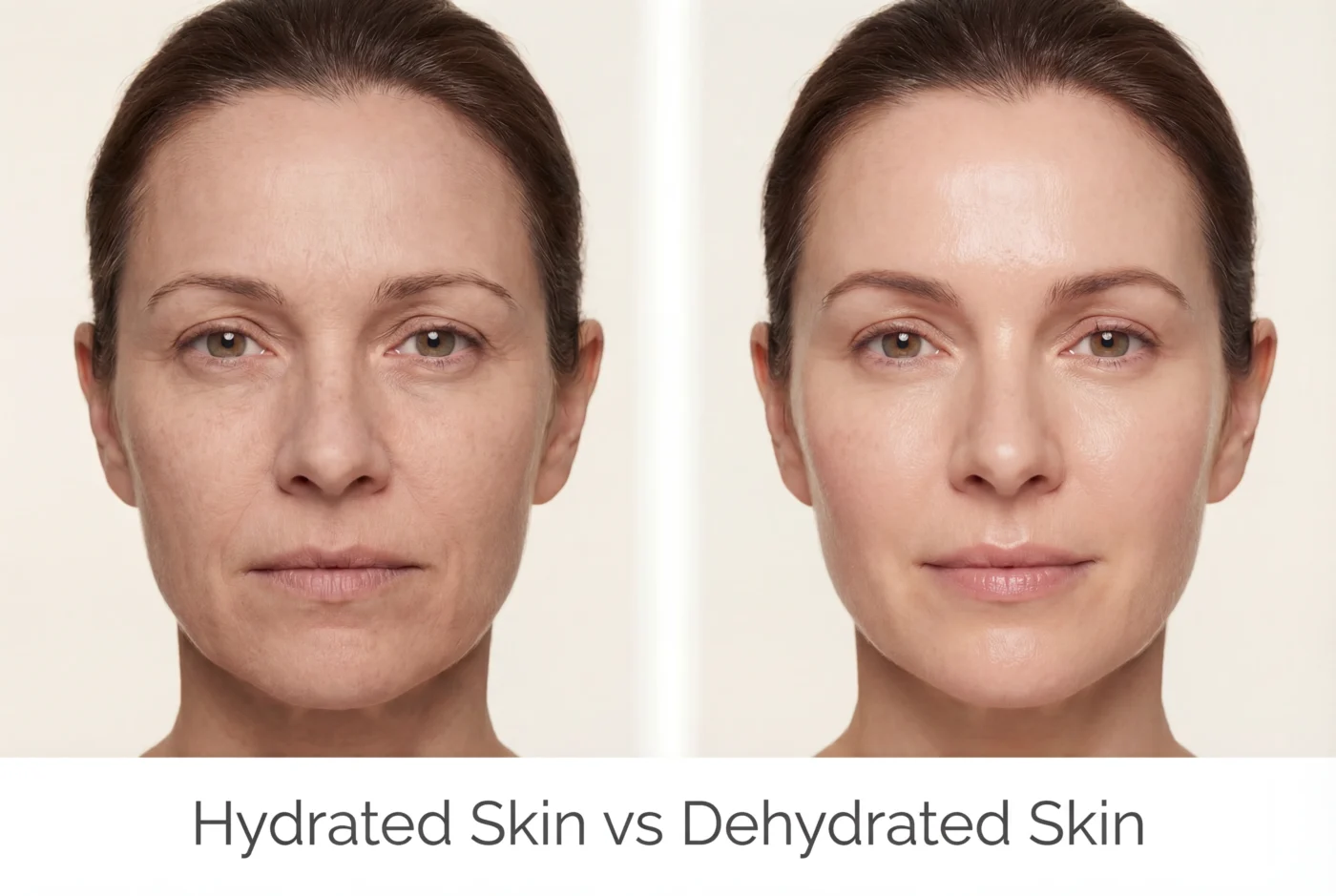
Dry skin feels rough and flaky to the touch. It appears dull and matte, never shiny. After washing, it feels tight and uncomfortable. Pores also look very small or invisible.
Where Does Dry Skin Appear?
Dry skin typically appears on specific areas. For example, you may notice it on your cheeks and around your eyes. Similarly, your legs and arms often show dry patches too.
What Is Dehydrated Skin?
Dehydrated skin is a skin condition. Unlike dry skin, this condition is temporary. In fact, anyone can get dehydrated skin. Even people with oily skin can suffer from dehydration.
The Science Behind Dehydrated Skin
Dehydrated skin lacks water, not oil. Your skin has low water content. This happens when you lose more water than you take in. Therefore, your skin may feel oily and tight at the same time.
Common Characteristics of Dehydrated Skin
Dehydrated skin feels tight but looks oily. It also shows fine lines, especially after makeup. Your skin appears dull and tired. Shadows often form under your eyes. Makeup settles into fine lines as well.
Where Does Dehydrated Skin Appear?
Dehydrated skin can appear anywhere on your face. It often affects the entire face evenly. For instance, you may notice it on your hands and neck too.
Quick Comparison
Let’s compare both conditions side by side.
What it lacks
Dry skin lacks oil. Dehydrated skin, however, lacks water.
Skin type or condition
Dry skin is a permanent skin type. On the other hand, dehydrated skin is a temporary condition.
How it feels
Dry skin feels rough, flaky, and scaly. Meanwhile, dehydrated skin feels tight and sensitive.
How it looks
Dry skin looks dull, matte, and cracked. In contrast, dehydrated skin looks oily but shows fine lines.
Main cause
Genetics cause dry skin. Lack of water, however, causes dehydrated skin.
Solution
Dry skin needs added oil. Dehydrated skin, conversely, needs added water.
What Causes Dry Skin?
Several factors cause dry skin.
Internal causes include genetics, hormonal changes, and medical conditions like eczema.
External causes include harsh soaps, hot showers, cold weather, and indoor heating.
What Causes Dehydrated Skin?
Dehydrated skin has different triggers.
Internal causes include not drinking enough water, too much caffeine or alcohol, lack of sleep, and stress.
External causes include over-exfoliating, harsh acne treatments, dry climates, and air conditioning.
How to Test Your Skin at Home
Try these simple tests at home.
The Pinch Test for Dehydration
First, gently pinch a small area of your cheek. Hold it for a few seconds. Then release it.
What the results mean
If your skin shows fine lines like tissue paper, you have dehydrated skin. Normal skin, however, bounces back immediately.
The Blotting Paper Test
Press blotting paper on different areas of your face.
For dry skin – Very little to no oil appears on the paper.
For dehydrated skin – Oil appears on the paper. Nevertheless, your skin still feels tight.
How to Treat Dry Skin
Dry skin needs oil and barrier protection. Therefore, follow these steps carefully.
Best Ingredients for Dry Skin
Ceramides help restore your skin barrier. Squalane mimics natural sebum. Shea butter provides rich moisture. Facial oils like jojoba or argan add missing oil as well.
Morning Routine for Dry Skin
Start with a cream cleanser. After that, apply a rich moisturizer with ceramides. Then add a few drops of facial oil. Finally, finish with SPF 30 sunscreen.
Evening Routine for Dry Skin
Oil cleanse first to remove makeup. Next, use a cream cleanser. Apply a rich night cream with shea butter. Then add facial oil as a final seal. For best results, use a humidifier while sleeping.
What to Avoid for Dry Skin
Avoid foaming cleansers and alcohol-based toners. Do not exfoliate daily. Also avoid long hot showers because they strip natural oils.
How to Treat Dehydrated Skin
Dehydrated skin needs water and humectants. Therefore, follow this routine.
Best Ingredients for Dehydrated Skin
Hyaluronic acid holds 1000 times its weight in water. Glycerin draws water into your skin. Aloe vera provides water and soothes irritation. Niacinamide repairs your barrier as well.
Morning Routine for Dehydrated Skin
Begin with a gentle cleanser. Then apply hyaluronic acid on damp skin. After that, spray a face mist. Use a lightweight gel moisturizer. Finally, finish with SPF 30 sunscreen.
Evening Routine for Dehydrated Skin
Double cleanse gently first. Next, apply a hydrating toner. Use hyaluronic acid serum. Then layer niacinamide serum on top. Seal everything with a gel moisturizer. For best results, sleep with a humidifier nearby.
Lifestyle Changes for Dehydrated Skin
Drink 8–10 glasses of water daily. Reduce caffeine and alcohol as well. Eat water-rich foods like cucumber and watermelon. Also get 7–8 hours of sleep each night.
Can You Have Both?
Yes, many people have both conditions at the same time. Therefore, you need to recognize the signs.
Signs You Have Both
Your skin feels rough and tight simultaneously. Fine lines appear when pinched. Products absorb poorly into your skin. Your skin also looks dull and uncomfortable.
How to Treat Both
You need to add both oil and water to your skin. Therefore, use a combined approach.
Sample routine for both
Start with a cream cleanser. Then apply hyaluronic acid serum for water. Use a niacinamide toner next. After that, apply a rich moisturizer with ceramides for oil. Add facial oil as a final seal. Finally, use a humidifier overnight.
Common Mistakes to Avoid
Mistake one – Using heavy oils on dehydrated skin
Heavy oils block water from entering your skin. Instead, use water-based serums first.
Mistake two – Drinking more water for dry skin
Water helps dehydrated skin, not dry skin. Dry skin, however, needs topical oil.
Mistake three – Over-exfoliating for flaky skin
Scrubbing damages your skin barrier. Therefore, use gentle chemical exfoliants once weekly.
Mistake four – Skipping sunscreen
UV rays worsen both conditions significantly. Consequently, wear SPF 30 every single day.
When to See a Dermatologist
Home care works for most people. However, see a doctor in these situations.
Your skin cracks and bleeds. You also have eczema or psoriasis symptoms. Home treatments have not helped after 6 weeks. You experience severe itching or burning. Your skin also shows signs of infection.
Summary
Let’s quickly recap what you have learned.
Dry skin lacks oil. It is a permanent skin type. It feels rough and flaky. Therefore, it needs oil and barrier creams.
Dehydrated skin lacks water. It is a temporary condition. It feels tight with fine lines. Therefore, it needs water and humectants.
Both conditions mean your skin lacks oil and water. Consequently, you need a combined treatment approach.
Conclusion
Understanding the difference between dry and dehydrated skin is essential. Using the wrong products will not help. In fact, it may make things much worse.
Therefore, identify your condition first. Use the pinch test or blotting paper test. Then choose the right ingredients for your needs. First for dry skin, add oil and ceramides. For dehydrated skin, add water and hyaluronic acid. For both, simply combine both approaches.
Finally, be patient with your skin. It takes 4–6 weeks to show improvement. Stay consistent with your routine every day. Your skin will thank you with a healthy, comfortable glow.
Frequently Asked Questions
Can oily skin be dehydrated?
Yes, absolutely. Oily skin lacks water but has plenty of oil.
Is drinking water enough for dehydrated skin?
No, it is not enough. Drinking water helps from the inside. However, you also need topical hydration.
Can dry skin become dehydrated?
Yes. Dry skin lacks oil. If you also lose water, you have both conditions.
How long does it take to fix dehydrated skin?
With proper care, dehydrated skin improves in 1–2 weeks. Dry skin, however, takes 4–6 weeks.
What is best for dry skin?
Look for ceramides, shea butter, squalane, and facial oils. Use cream-based formulas.
What is best for dehydrated skin?
Look for hyaluronic acid, glycerin, aloe vera, and niacinamide. Use gel or water-cream formulas.